Monday, June 20, 2022

With UniPhi - Implement Project 13 Governance Pillar

The UniPhi platform provides support in implementing governance into the project environment for project 13 organisations (and any organisation for that matter). It has a range of features that enable organisations to configure their governance models then track compliance. One of the most valued add to this mix, and probably the least recognised, is the data governance UniPhi provides. 

It is very hard to have bad data when using the UniPhi platform. Whether the data source is external to UniPhi and imported in or is captured via the broad interface range of cost, time, contract, resource, documents, issues and risks, you have to work very hard to have bad data come out the other end. This is because the UniPhi platform (while highly configurable) is a structured system that forces users to follow the bouncing ball of document version control, variations management, issues management, risks management etc and hence is always capturing data in a contextual way that makes it good.


UniPhi provides the transparency to magnify any governance issue.

Another left field support of governance UniPhi provides is transparency. Audits undertaken at our clients whether they be for ISO compliance, Government policy compliance or financial governance are a doddle as the auditor can review reports showing full compliance at the click of a button. This not only saves our clients thousands in compliance cost, it provides assurance that the system designed is the system being followed.

Partially complete invoice with remaining users flagged as awaiting sign off.

Leaving the outside the box areas aside, UniPhi also provides a host of features that support the governance pillar in project 13. Included in this is:

  1. Sophisticated party/role model controlled by user based encrypted logins that gives full audit history of all records across the system
  2. Digital signatures for approving key documentation like project management plans, budgets, contracts, change requests, invoices and variations.
  3. Configurable delegations of authority that enable the organisation to input approval workflows for all of the above documentation
  4. All the above documentation is auto generated with the content coming from the relevant modules that provide the interface and the quality control to capture the right information. 
  5. Fully configurable roles with documented responsibility and the ability to embed these responsibilities into features of the system like sign off of documents, contract instructions, issues and risk strategies
  6. Fully configurable cost and contract modules that control budget change, contract approval and more. 
Contract permissions configuration page in UniPhi, giving comfort to the "C Suite" that your governance model is being complied with. 

If you like to sleep at night and you're a project director or "C Suite" executive, it might be worth checking us out, Project 13 or not.

Contact us via chat at https://uniphi.com.au or email us at sales@uniphi.com.au

Thursday, June 09, 2022

With UniPhi - Project 13 Digital Transformation for the Capable Owner is more than BIM and the Digital Twin

Sadly, most of the talk in the Project 13 arena around digital transformation focuses on digital design elements like BIM and the digital twin. We believe this is further paving of cow paths that has been the scourge of the construction and infrastructure industry for years. 

If you look outside of construction and infrastructure and see how other industries do projects, while not perfect, you will not see any of the debate and management theories prevalent in construction. Jira, Slack, Basecamp, Monday, Trello etc are all incredibly successful pieces of software used to manage projects. These products are worth significantly more than the most successful construction project management software products like Procore and Aconex and yet, these products are rarely used in construction. 

Digital transformation should focus on better collaboration aligned with traditional project controls automation


There is too much focus on the design model in construction. Most products that capture BIM and digital twin information do not work well with non-industry gurus who are the ones paying the bill and providing the outcomes required. Like a lot of construction software, the drivers of these products are few in number and the systems are often closed, accessible only on the machine installed. 

Even when published online, large file sizes, complex interfaces with little room for comment threading and issue/risk management mean that these models are great visualisation tools but do nothing to track how a design is evolving through new outcomes, requirements and capability conversations. It is these conversations that must be passed down the line to contractors and sub-contractors to ensure the outcome is kept in mind at all times of the build. This is the key elements of agile collaboration, sprints and value-based project management implemented by users of collaborative tools.

What is lost in the world that uses the collaborative tools referenced above is the control of program, cost and resource allocation. These elements, so heavily focused on in construction, could definitely be adopted by non-construction industries to assist them in delivering on time and within constraints of cost and quality. Combine these two elements (Collaboration and Project Controls) into one holistic platform and you now have the ability to create true digital transformation on any type of project, and this is what UniPhi has done.

The UniPhi platform can replace numerous systems and integrate with others to streamline the number of tools, improving the volume, quality and value of project information

 UniPhi brings the following use cases to the table of digital transformation:

  1. Web-based access open to any stakeholder in any business
  2. Captures and manages the version control of new design documentation
  3. Links design documentation to design issues and the conversations that lead to their resolution
  4. Links cost impacts on these same design issues to contract variations budget variances and change requests
  5. Formalises the approval of original budgets via digital signatures based on delegated authorities
  6. Formalises the approval of budget change requests via the same digital signatures on delegated authorities
  7. Fomalises and controls the assessment of progress invoicing with one workflow from supplier to project manager to accountant and to accounting system via proven delegated authority digital sign-offs.
  8. Automates the updating of cash flow and program based off signed off progress invoicing and earned value assessment
  9. Automates the multi-functional reporting of project, program and portfolio cost, schedule, quality, risks, issues, resource and contractual performance, providing time for analysis and course correction
  10. Eliminates the need for progress meetings to find out the status of tasks
  11. Enables the collaboration around risk mitigation and the drawdown of contingency to meet emerging risk demand
  12. Facilitates the communication of outcomes to new stakeholders as they are onboarded into the project/program
  13. Transparent forward-looking utilisation of human resources across the value chain to identify bottlenecks in the supply
  14. Captures time against tasks and assesses earned value for those tasks to generate real-time and accurate earned value performance reporting
  15. Captures in field data including defects, surveillance, daily diaries, toolbox talks etc etc
  16. Rolls this data up into trends and uses this information for early warnings on new projects via AI and machine learning

And, and, and, and.....

UniPhi's 11 standard modules that integrate with each other and provide a platform for true digital transformation


The integration of the 11 core modules to facilitate the above use cases is total blue ocean for capable owners who leverage this software to its fullest

Wednesday, June 08, 2022

With UniPhi - Project 13 - The Capable Owner

As referenced in our previous post, the capable owner is the key foundation pillar for project 13 to have any chance of success. It is, by far, the most complicated and difficult to achieve. This may sound offensive to owners of construction and infrastructure assets, but when you consider the current culture of these industries, you can see the challenges that lie in creating capability. Traditional practice in construction and infrastructure worldwide is to establish an adversarial contractual relationship and hire contract gurus (otherwise known as bullies) to make sure the company they represent wins in a win/lose contest.

Managing the value chain is coming via Project 13's capable owners to construction and infrastructure

The key principle for capable owners in their attempt to address this cultural destruction is to develop long term B2B relationships, built on trust and transparency. Various contract forms have been developed to assist with this (ECI, PPP, NEC etc), but the key to success is having business relationships that value the partnership first and the contract second. The contract should only be there in the event of divorce, not as the driving management document of the project.

The value that can be unlocked, when this type of environment is established, is massive. Labor costs can be dramatically reduced due to reduced administration, reduced re-work, and more efficient planning. With focus on outcomes, the total life costs of the asset can be dramatically reduced as more efficient fixtures and materials are invested in and installed effectively to reduce long-term maintenance. Combine all these elements and you have a lot of $ to play with. If this is distributed effectively along the value chain so that all players share in the success, then relationship bonds should be strengthened, and hence the next investment should unlock even more value.

With UniPhi, being a capable owner doesn't have to be a pie in the sky
 

Of course, for any grisly grey-haired player in the industry, this is pie in the sky stuff.  BUT, just like the value unlocked from the use of cross-functional teams on collaborative platforms on projects WITHIN a company, those owners who do succeed (and their associated suppliers) are going to be swimming in blue ocean.

With UniPhi, we believe capable owners have the system that can support a lot of the leg work that goes into making the pie appear in the sky. UniPhi has both the transparent project controls framework that clearly displays current turnout costs, profitability, and resource load. It also has collaborative elements that foster complex adaptive teams. It is this second element that really drives the value. Unlike other construction collaboration tools that have effectively "paved a cow path" on RFIs, UniPhi's issues and risks modules provide a platform for multiple companies to comment on, rate and escalate key items that are going to endanger the successful outcomes the team is aiming for. Our issues system is the simplest module across the software, and yet supports the development of teams to manage complexity and allow for the emergence of two key principles in a complex project management environment.

With UniPhi, your reports are instantly live and viewable by all, with transactional data one click away
 

Imagine a dashboard that shows accurate, live earned value performance that formulates instant estimate at completion forecasts alongside of key issues and risks that are being addressed with conversations on those issues and risks one click away. Milestones, achieved recently and about to be achieved, are also displayed as are resources that are near or over capacity and key supply contracts that have to be let, if lag items are going to be delivered on time.

All of this information on one page, with the underlying transactional data one click away. That's how you become a capable owner.

Monday, June 06, 2022

With UniPhi - Deliver on Project 13 Principles

Project 13 is a documented set of principles and processes to support a more integrated project delivery for infrastructure and construction projects. It's idealistic goal is to be able to create a collaboration across organisations that works towards a common outcome. Construction and infrastructure projects can be very adversarial and focus on the letter of the contract significantly more than projects conducted in other industries. Each company working on the project is in it for themselves (quite naturally) and often those that win are at the considerable expense of others that lose, with the largest likely to be the owner of the asset being built.

From https://www.leanconstruction.com.au/blog/project-13-a-new-approach-to-infrastructure-delivery/
 

Many contractual concepts have been developed to try and deal with this issue, including the NEC suite of contracts, that try to force organisations to get together more often and earlier to focus on problem-solving rather than variation gouging. Their success, however, is limited by the fact it is still centred on the contract. 

Project 13 tries to change this by encouraging owners of assets being built to build collaborative enterprises that have strong long term relationships with suppliers. While there are 5 pillars to Project 13, this is the key one. A client needs to build trust between them and their supply chains, focus on collaboration, not mediation and remove the emphasis on the contract. Building these values of trust, transparency and common purpose is a significant hurdle and is the key foundation for project 13 to work. From there, the challenge becomes more about process than cultural values, and systems like UniPhi can make these processes a doddle to implement.

The five pillars of project 13 are:

  1. Capable Owner
  2. Governance
  3. Integration
  4. Organisation
  5. Digital Transformation

Each of these pillars has a set of principles to guide people in achieving their key outcomes. Over the next 5 days, we will explain how UniPhi's web based portfolio, programme and project management application can support these principles, allowing owners to focus on the cultural change and letting the processes take care of themselves.

The simplest thing that UniPhi does is it provides an enterprise project management system to on-board any project team member from any company within a second and allows them to then collaborate with other team members from other companies. This then fosters a total transparent data architecture where everyone knows what the goal is, where the design is at and the reasoning for decisions made along the way. You could say that the principles of UniPhi are the pillars that support the processes of project 13. 

Anywhere access, global collaboration = total transparency

 The key principles of UniPhi have always been:

  • Transparency of information
  • Integration of cost, time, quality, risk and issue data
  • Access anywhere, any time
  • A system people want to use

These principles, when implemented by a capable owner, dramatically increase the chances for successful investment in any asset.


Wednesday, June 01, 2022

May Wins


Dreams of the end of lockdown

The last two months have been wild ones for us at UniPhi. The beginning of April saw numerous staff run for the hills to long awaited travel holidays, as Covid lockdown ending freedoms finally kicked in. And of course, this happened at the same time as many others fell ill to this dreaded virus.

May has seen a continuation of this massive loss of people on the ground as a lovely flu to end all flus wiped out not only our systems architect but many others. Covid continued to have its say too with our CEO finally succumbing despite having dodged it from his OS travels two years earlier.

Bleugh

But, despite all this, we're proud of what we've achieved. UniPhi's software will go live in June as the core application for project controls on the Sydney Metro EDS. This has been a massive undertaking and we are delighted with the results. Hopefully, we will be able to share the outcome as the switch is flicked and over 100s of users start using the system in anger.


We have welcomed a host of new businesses onto the UniPhi platform over the past couple of months and are pleased to receive overwhelmingly positive feedback from the sponsors and end users. UniPhi is a very transformative product with one CEO once describing it like having a triple heart bypass with a lung replacement at the same time. Challenging to implement the change but once achieved the benefits are life changing.

Raj Deo joins us as our new COO


We also welcomed Raj Deo back into the business. Raj is an old colleague, who has returned from his sojourn into the corporate head office world, to bring his learned and wiser brain back into our business as chief operating officer. Welcome back Raj and thanks, you're already making a massive difference to the business.


UniPhi 18 is to be released on 15th August this year and our dev teams (the ones not in the Bahamas or on a sick bed) have been busily completing the key features of this release. The focus of 18 is on user experience with many existing screens being streamlined or removed to make it simpler to navigate and use our software. We will be posting more about this release over June and July on the blog.

Well, that's about it for this month. We've got plenty of news that couldn't quite make the deadline this time but we're looking forward to telling our community all about it in our "June Wins" post.

Tuesday, May 31, 2022

New "With UniPhi" Series

This month, we kick off a new blog series called "With UniPhi". There is such a broad range of features within the UniPhi application, it can take end users some time to utilise the full power of its capability. This series will draw on some key portfolio, program and project management areas that can be supported by our software. Included in this is:

  1. Implementation of project 13 principles
  2. Establishing a PMO
  3. Delivering on "Managing Successful Programmes" processes
  4. Growing "P3M3" maturity

Many of you may notice that most of these items relate to methodologies that have come out of the office of government and commerce in the UK. This is because we are now fully embedded into the UK market. We're focusing on enabling UK businesses to realise the benefits these frameworks, processes and principles bring to an organisation.

Project 13 is an engineering industry led initiative that focuses on creating a business model for construction and infrastructure projects that integrates the parties involved into an overarching enterprise with common goals and values. UniPhi is a central digital enabler to achieving this goal because it integrates all areas of project work from engineer and contractor on the ground to sponsors and executives tracking performance. 


Project 13's take on the PRINCE2 governance framework - ingenious tweaks for construction and infrastructure

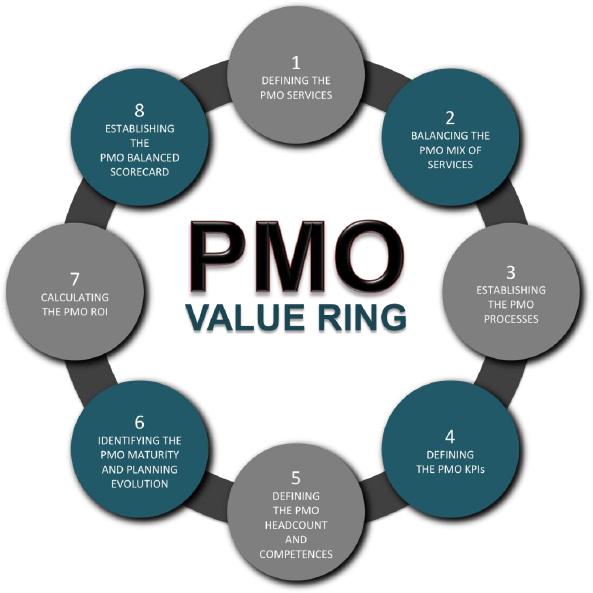
For our founder and CEO, the modern day PMO is a sad outcome from a concept that inspire him to create UniPhi in the first place. Organisations maximise value when they integrate cross functional teams to work on the right value adding investments in their business. UniPhi, as a web application with a host of collaborative features contextual to the end user, facilitates this integration of diverse skills to enable these teams to focus on common goals and defined scope. Unfortunately, most PMOs today are governance and police states focused on making people fill in the right progress report. This doesn't mean that the opportunity and value of the PMO isn't still there. In fact, enterprises can generate real competitive advantage by implementing the PMO as designed back in the 1990s and UniPhi is the key tool to enable this to happen.

The PMI PMO value ring provides all you need to know with what is wrong with the modern day PMO

Managing Successful Programmes  (along with its sister methodology on projects, PRINCE2) is a methodology for managing programmes of works. It's uniqueness is in the focus on alignment of strategy and benefits realisation across programmes of investments. Similar to the benefits of the PMO (which is the implementation vehicle for MSP) MSP provides the methods, processes and principles to follow if you want to derive value from your investments. All of these methods and processes can be configured in UniPhi and then all programme resources need to do is follow the bouncing ball to grow the culture and thereby capability of the business in getting value out of spending money.

O'Reilly Media's Principles of programme management....brilliant!

P3M3 stands for portfolio, program and project management. It's the testing model to assess how well you have implemented MSP and Prince2. UniPhi was built off the back of our founder assessing global organisations against P3M3 criteria. Implement UniPhi and you will have a level 5 P3M3 maturity level within 12 months. The benefits of this are out there to be seen. We have assisted many organisations double and triple their EBIT margins as well as overall business valuations. 


Over the next month, we will write expansive blog posts on how UniPhi delivers on these four concepts, putting detail to the claims made above.

If you want to cut to the chase and start making money or delivering triple bottom line value right now, email us

Tuesday, November 09, 2021

UniPhi for Pre-Sales

UniPhi has two main purposes in life: 1) provider an umbrella application to unite all applications in an organisation or project ecosystem (one application to rule them all) and 2) provide software that people want to use.

This umbrella purpose has meant delving further and further upstream (i.e. pre-sales) and downstream (i.e. maintenance and operations) of a project's life. This blog post is all about pre-sales and the two methods UniPhi provides to support these activities. The first method is a "use UniPhi for your CRM" method. The second is "integrate UniPhi with your CRM Apps". And there will definitely be a little from column A and a little from column B for all organisations. 

The key to UniPhi being able to seamlessly integrate with numerous apps is the fact that we have data entry options for most of these things as well and hence the data mapping is already done. Then with both UniPhi and most CRM apps having fantastic RESTful APIs, we can glue them together in days rather than months and that means huge savings.

The power of UniPhi's REST API and broad interfaces


So what use cases are UniPhi capable of taking care of from within its own interfaces. Here's the list:

  • Source of truth for contacts
  • Have sign up forms from your website come directly to UniPhi's contacts database
  • Flag contacts with all sorts of meta data (e.g. sector, key target, blue sky revenue etc)
  • Export these contacts for campaign management to various apps via excel or API
  • Add prospect conversations to a contact
  • Create leads with actions and conversations linked back to the contact
  • Convert the lead to an opportunity or bid project
  • Assess that bid with go/no go decision support and documentation
  • Create the estimate
  • Forecast risk adjusted cash flows and resource profiles
  • Create the proposal document
  • Convert the bid to a project automatically updating the resource plan and cash flow.

You'll note from the above that you will need campaign management software to assist you to manage your digital and traditional marketing processes.  However, to support this, in coming months UniPhi will have direct API integration with the following applications:

  • Hub Spot
  • Campaign Monitor
  • Mailchimp

The main integration with these apps will be the synchronisation of contacts with the idea that both systems can merge contacts, UniPhi can be the source of truth and push distribution lists to these systems or the CRM can be the source of truth and push contacts to UniPhi. 

What else would you want to be communicated across these apps?

Are there any others you would like to see on this list?  

Contact us via email at info@uniphi.com.au to suggest an app.

Friday, October 01, 2021

Significant success of UniPhi 17 - Additional AUD30bn worth of capital spend being supported

UniPhi 17 success seen in the 100% growth rate since live

Firstly, we'd like to apologise for the radio silence these past couple of months. Our excuse? New business!

UniPhi 17 has proven to be a great success, with some bedding down of the new features (thanks bleeding edge clients, we love you). In addition to rolling out the software to dozens of new customers during August and September, we've also been coping (like many others) with all staff in lock down. However, being glass overflowing kind of people, the main focus of the past two months has been the exciting growth in the business.

UniPhi is supporting well over AUD100bn in infrastructure projects including some significantly high profile major works. In the last two months, 5 new major projects have been added to this list. In coming months we'll be publishing case studies on each of these as we work through the permissions process and pass enough time to be able to demonstrate the significant benefits we are bringing to these ventures.

Expanded use - collaboration across silos

Admittedly, our support for these projects traditionally has been niche. A bit of JV management here, design issues management there, but never all the features working together as designed. Due to UniPhi 17, four of the new deployments are finally being designed to leverage at least 50% of the functionality that exists in our application. One exciting example of this brings together a virtuous flow of issues management through to variation claim and invoice.

UniPhi's issues management module is the most value adding module in the system. Design teams on major projects are starting to realise this and are capturing their issues as an when they occur in UniPhi (with some even converting risks to issues as they trend to something that could lead to a variation). Collaboration and commentary on the issue, along with actions to resolve it are logged over time. Some get resolved, others become possible variations. 

These possible variations are added to UniPhi's contracts  module (now that this is being used by the JV for invoicing) and this surreptitiously updates the EAC. The issue is linked to this possible variation and the documents module documents the quote for the client to review. Comments will be maintained against the original issue but the information captured will be displayed contextually in no less than 7 places throughout the application. This goes a massive way to unlocking tacit knowledge as people in other silos start to learn about issues across the program and can input into their resolution. 

Finally, if approved, the variation status changes and is ready to be invoiced against. Resource loads can be applied against it and this variation will automatically appear in peoples time-sheets. As it is delivered, progress gets updated, the invoice goes out the door and should a dispute occur, all the information from day 1 to day 100 is there for review by anyone with a UniPhi license.

Overseas expansion

It is also exciting to announce 5 new deployments commencing in Europe. These major sales successes are the fruits of 2 years of sales effort including a fortuitous 2020 roadshow that completed in February of that year. More announcements will be forthcoming on these ventures soon.

Virtuous Circle Enterprise Resource Planning

We've also added dozens of enterprise deployments for small and medium enterprises to manage their businesses. UniPhi 17 finally delivers on our vision (18 years on) of a virtuous circle enterprise resource planning system that:

  1. Captures and tracks the conversion of prospects and leads 
  2. Assesses the go/no go opportunities of bids to these leads
  3. Facilitates the development of estimates for new bids
  4. Risk adjusts both the cash flow and resource effort profile of these bids
  5. Seamlessly converts these bids to wins or losses providing key CRM sales metrics automatically
  6. Baselines, cash flow, EAC and resource effort information
  7. Supports the updating of estimates to complete across all three elements above (i.e. cash flow, EAC and resource profiling)
  8. Captures time-sheet data with distributed data capture of progress through updated effort estimates and collaborative commentary
  9. Invoices for completed work as well as managing purchasing through to supplier payments
  10. Manage the assessment of earned value against effort and baseline
  11. Report profit to date and at completion
  12. Track backlog and booked to burn
  13. Consolidate all of the above into portfolio based information on any of the above matrices (e.g. total backlog, sector profitability, company booked to burn, corporate cash flow, over and under utilised staff etc).
  14. Use all of this information to generate new leads and the circle is complete.

Can anyone name a system that does all of the above and for under AUD1,000/user/year (excluding timesheet users which are considerably less).

How did we do it? The critical success item was realising that all this data supports each other. By developing cross functional software, you break down not only the silos of people but also the silos of systems. Time-sheet information is needed for invoicing, earned value and estimate to complete resource planning so why not have these systems along with your time-sheets so the data just flows to these modules automatically. A fee included in a bid should become the contract value post bid via the changing of its status, not the re-entering of it into the job system from the submission system. a project commences at opportunity stage and can be tracked pre-award through to completion.....etc etc.

One major benefit to this design that was not foreseen is the benefit of integrating time-sheets into an ERP and lead to the one thing our users could do to get even more value out of our product. Time-sheets have to be entered by everyone. This distributed data capture model is at the heart of our design but it has been difficult to challenge people to open the system up to the entire ecosystem of project participants. Time-sheets gives us that opportunity and once we realised this, we have added more and more features to it to coax the project controls community into using systems to gather information rather than meetings to do so. 

Try it out, it is an amazing productivity improver!


Monday, July 05, 2021

UniPhi 17 is Live!

With our first round of clients upgraded over the weekend, UniPhi17 is now a production release! 

This new version has two main aspects, a complete re-write of our contracts module and the implementation of embedded charts throughout the application. Why were these two elements our investment focus? 

Contracts module 


The contracts module is the fourth most intensive data capture area of UniPhi, after timesheets, issues and  documents. What's more the data is numbers heavy as it is used to track the adjusted contract value and progress invoicing across all purchases within a business or for a program of works. Feedback from clients was that while it was a lifesaver in terms of tracking all the adjustments that need to be administered to an original contract, data entry was slow and clunky. So we decided we'd respond with a focus on quicker data entry, easier re-formatting and the ability to build and manage larger and larger contract values.

Additional features for contracts while we're at it 

Earned Value

As we were investing in this module, we decided some new features were in order as well. For a while now we're been supporting clients track earned value at a project level but our engineering clients wanted more. They battle to track performance against deliverables during design, building complex spreadsheets that are hard to maintain with actual data in an attempt to do so. Again, we felt responsible for delivering something more and so, we introduced earned values for contract deliverables. Three new screens were essential for supporting this: An earned value screen to measure progress via a stage gate methodology, comment threads against contract deliverables to validate the earned value claim and an effort schedule that provides a baseline at the WBS level for planned performance. 

 
Earned value webinar

Charts - In 2018 we released as part of UniPhi 14 a direct integration with Power BI and an embedded Power BI product that allows you to publish your own charts within the application, however, there are two issues with this: You need to have internal capability to build the dashboards and you can only view them in the embedded dashboard page. We wanted to support all our clients plus be able to give instant visual feedback to our users when they change budgets, add issues or risks, commit contracts and submit timesheets. These charts have generated significant interest from our user base and we plan to leverage this concept with more and more charts supported by drag and drop selection for users to get the visual that means most to them right where they need it.


The full webinar series for UniPhi 17 is in a playlist on YouTube.

So, if any of this has piqued your interest, give us a call or register for a demo. We'd love to show you our biggest and best release in years.